
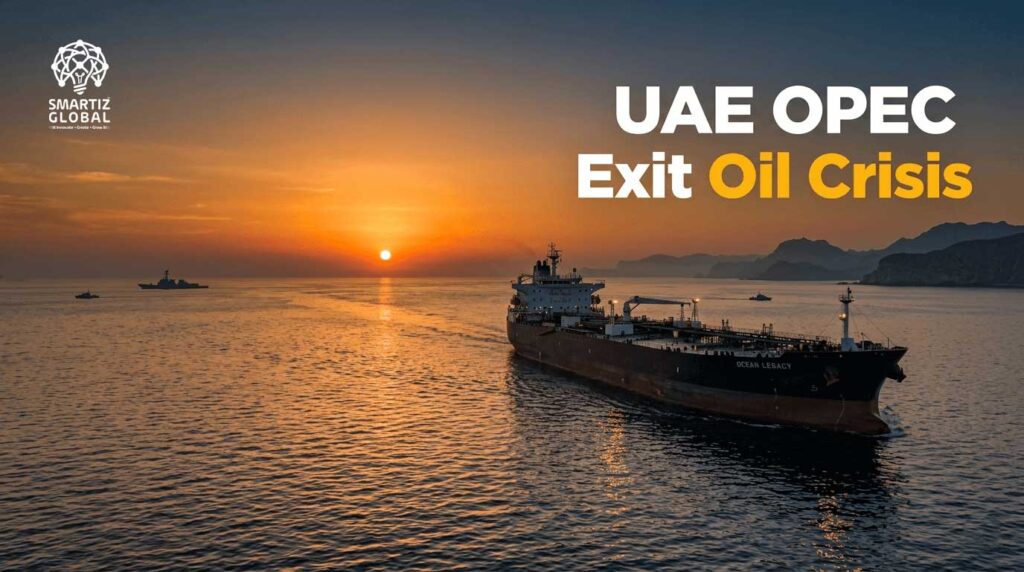
UAE OPEC exit reshapes oil markets amid Iran war and Hormuz crisis. Explore 7 key shifts driving supply changes, prices, and global economic impact.
War. Oil. Power. Time.
On April 28, 2026, those four forces collided – and what had been quietly breaking apart for years finally broke.
The Organization of the Petroleum Exporting Countries – a 66-year-old alliance that has shaped energy prices, inflation and global stability – has taken a direct hit. The United Arab Emirates, one of its most powerful members, announced it was leaving on May 1.
No drama. No outrage. No political drama.
Just a calculated, strategic exit timing amidst a global energy crisis caused by war with Iran and disruptions in the Strait of Hormuz.
This is not just a policy shift.
It’s a sign that the rules of global energy are being rewritten – right now.
Table of Contents
Context: A Crisis That Is Already Pushing The World To The Brink
Before talking about OPEC, you need to understand the scale of the disruption that is already underway.
The global energy system has been under severe strain since the US and Israel launched strikes on Iran on February 28, 2026.
Here’s what happened next:
- The Strait of Hormuz – through which ~20-27% of global oil flows – was effectively blocked
- Oil shipments slowed or stopped altogether
- LNG exports from the Gulf took a major hit
- Insurance costs for tankers increased 4-5 times
- Energy markets entered a state of simultaneous panic and instability
Key figures tell the story:
- $120/barrel – Peak Brent crude after war escalated
- +27% – Global gas prices up
- +140% – LNG spot prices up in Asia
- -2.9% GDP – Estimated global economic hit (annualized)
This isn’t just a spike – it’s what energy analysts call a structural shock.
And in the middle of it, the UAE made its move.
OPEC at 66: From Global Kingmaker to Cracking Alliance
To understand why this matters, you need a quick history.
The Organization of the Petroleum Exporting Countries was founded in 1960 by five countries – Saudi Arabia, Iran, Iraq, Kuwait and Venezuela.
Its purpose was simple:
Take control of oil prices away from Western companies and put them back in the hands of producers.
For decades, it worked.
- Decrease in production → Increase in price
- Increase in supply → Decrease in price
- Control the market → Control the global economy
Then the world changed.
The Shale Revolution Broke The Math
In the 2010s, U.S. shale production exploded.
America became the world’s largest oil producer.
OPEC responded by forming OPEC+, bringing in Russia and others.
But behind the scenes, something else was happening:
Internal tension.
UAE Problem: Too Much Oil, Too Many Limitations
The UAE spent years investing billions to increase production.
- Capacity: ~4.85 million barrels/day
- Future target: 5 million barrels per day by 2027
But OPEC quotas were holding them back – often 30% below capacity.
Think of it this way:
You build a huge factory… and your trade group tells you to shut down half the machines.
That’s lost revenue. Lost leverage. Lost opportunity.
And Abu Dhabi decided it was done by playing by those rules.
Why Now? The Timing Wasn’t Random – It Was Strategic
At first glance, leaving OPEC during a supply crisis seems paradoxical.
After all, with the Strait of Hormuz restricted, exports are already limited.
So why leave now?
Because it is a complete cover.
The UAE Energy Minister stated bluntly:
“The timing is right because it won’t have a significant impact on the market…”
Translation:
- The market is already chaotic
- Their exit won’t cause an immediate shock
- By the time stability returns… they’ll be free
That’s the real game.
Long Game
When oil flows return to normal:
- UAE can pump at full capacity
- No quotas
- No sanctions
- No cartel discipline
That’s a huge advantage in a post-crisis world.
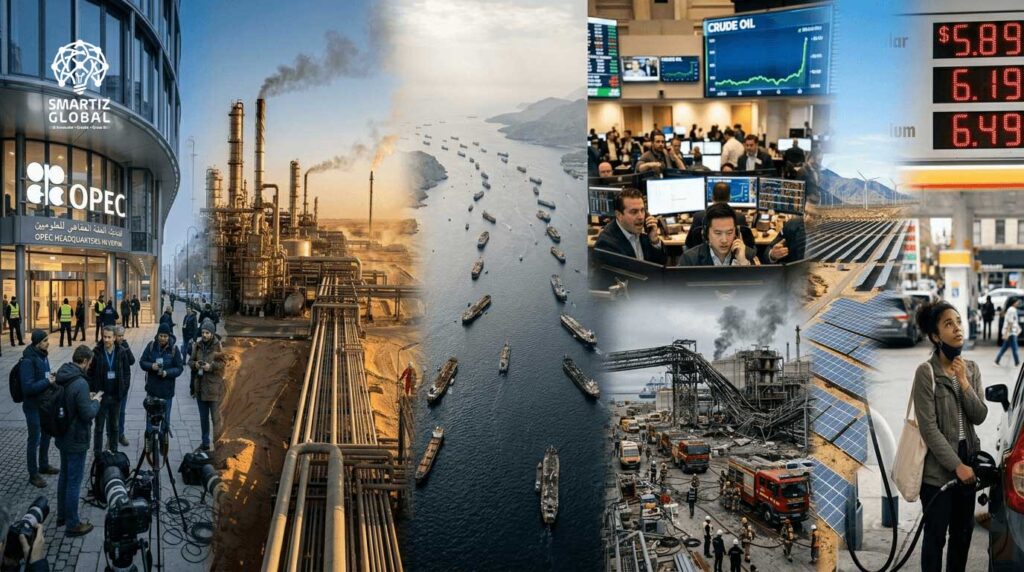
The Strait of Hormuz: The Chokepoint That Broke The System
If there is one place that defines this crisis, it is the Strait of Hormuz.
A narrow waterway – just 21 miles wide at its narrowest point – handles:
- ~25% of global seaborne oil
- Massive LNG exports
- Important energy flows to Asia and Europe
What Happened in 2026
- Iran blocked passage
- Tankers halted operations
- Risk of mines and attacks increased
- Shipping insurers withdrew
The result?
Global supply eroded.
Timeline Snapshot
- February 28 – War begins
- March 2 – Strait effectively closed
- March 4 – Oil rises above $120
- March 18 – Qatar LNG facility hit
- April 8 – Ceasefire attempt fails
- April 28 – UAE quits OPEC
This isn’t just a disruption – it’s systemic stress.
Inside The Gulf: Saudi Arabia vs. UAE (Quietly)
One of the most revealing details of this announcement:
The UAE did not consult with Saudi Arabia.
That is not normal.
Saudi Arabia is the de facto leader of OPEC – and historically its closest ally.
But the relationship has been changing:
- Competitive economic perspectives
- Regional differences (Yemen, trade, policy)
- Different energy strategies
What Does This Signal
When a country makes a “sovereign decision” like this:
It usually means that negotiations behind closed doors have already failed.
This was not sudden.
It was inevitable.
Could OPEC Collapse?
Let’s be clear: OPEC is not dead.
But it is weaker than it has been in decades.
UAE presents:
- ~12-17% of OPEC production
- ~$77 billion in annual revenue
That’s no small loss.
That is structural damage.
The Real Risk: A Domino Effect
Other countries may now ask:
- Why stay in a system that limits profits?
- What if going alone is more profitable?
What if countries like Iraq or Nigeria followed suit?
Then OPEC doesn’t just weaken – it breaks into pieces.
What Does This Mean For You (Yes, You)
Let’s take this out of geopolitics and into real life.
Because you are already experiencing it.
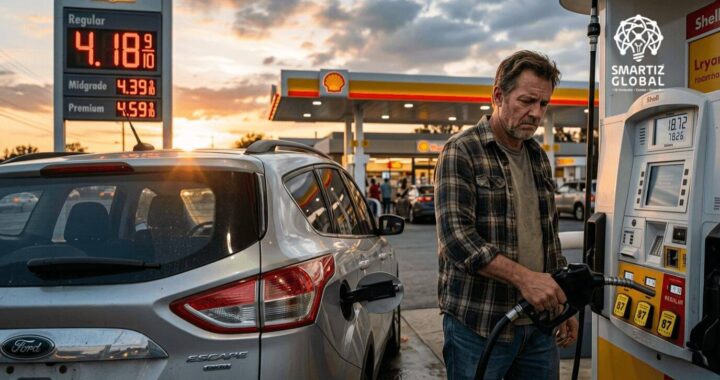
Gas Prices
- Globally up ~27%
- U.S. average ~$4.10/gallon
Food Prices
Fertilizer relies on natural gas.
Gas supply disruption → Fertilizer price hike → Food price hike.
Flights
- Higher Jet Fuel Costs
- Changed Airspace
- Longer Travel Times
Big Idea
Less Integration in Oil Markets Doesn’t Mean Cheaper Energy.
That means:
More instability. More uncertainty. More economic ripple effects.
The Iran Factor: Why Peace Isn’t Coming Easily
While Markets React, Diplomacy Struggles.
US wants:
- Hormuz reopened
- Nuclear talks included
Iran wants:
- Issue separation
- Relief without concessions
Both sides benefit.
And both understand the stakes.
Control the Straits = Influence the Global Economy
Until that balance changes, uncertainty remains.
The Renewable Energy Accelerator That No One Planned
Here’s the twist.
This crisis could accelerate the energy transition faster than any climate policy.
Why?
Because the economics changed overnight.
What Countries Are Doing
- Remote work mandates
- Expanding public transport
- Reducing energy consumption
- Emergency renewable investments
Changing Mindset
Renewables are no longer just about climate.
They are about:
- Energy Security
- Independence
- Stability
The UAE is also positioning itself as a low-carbon energy supplier.
Suspicious Business: Crisis as Opportunity
There is another layer to this story.
Massive financial stakes were made:
- Minutes before big announcements
- Predicting a drop in oil prices
- Costs of hundreds of millions
Such patterns do not go unnoticed.
Investigations are ongoing.
But it highlights something important:
In every crisis, someone profits from some kind of precision.
The Crisis Navigator’s Playbook
Here’s how to think clearly in such a situation.
1. Chokepoint Audit
Identify where disruptions cause the most damage – fuel, food, logistics.
2. Sovereign Signal
Unilateral decisions = deep fractures.
3. Ladder of Instability
Know if it’s a spike, a shock, or the new normal.
4. Secondary Wave
Today oil → tomorrow food inflation.
5. Tell Time
Crisis decisions reveal real priorities.
6. Building Resilience
Diversity is no longer optional.
Frequently Asked Questions
Will the UAE’s exit have an immediate impact on oil prices?
Not dramatically in the short term. With the Strait of Hormuz still blocked, the UAE is currently unable to significantly increase exports.
The real impact will come later – when flows normalize and the UAE is able to produce at full capacity without OPEC limits.
At that point, additional supply could bring prices down, but not necessarily back to pre-war levels due to ongoing structural damage and supply constraints.
Could OPEC really collapse?
It’s possible – but not guaranteed.
OPEC has survived crises before, but losing a major producer like the UAE weakens its ability to control supply.
If other countries start following this path, the cartel could split. The next 12 months will be critical in determining whether OPEC adapts or continues to lose influence.
How long will the Hormuz crisis last?
There is no clear timeline.
Even if diplomatic agreements reopen the strait, the damage to energy infrastructure – especially LNG facilities – will take years to repair.
Markets can stabilize faster than physical supply chains.
That means that instability will continue even after headlines indicate the crisis is “over.”
What should customers expect next?
Expect pressures from:
Fuel prices
Food costs
Travel costs
The secondary effects of this crisis – particularly food inflation – are likely to intensify over the next 3-6 months.
Even if oil prices fall, their ripple effects will continue in the global economy.
Final Thought: This Isn’t Just a Crisis – It’s a Reset
The UAE didn’t just leave OPEC.
It revealed something much deeper:
The old system of controlling global energy is collapsing.
What’s Taking Its Place?
- More competition
- More fragmentation
- More instability
- Rapid energy transition
And for everyday people?
That means one thing:
The price you pay – for gas, food, and everything in between – is now more tied to geopolitics than ever before.
And that story is still unfolding.