
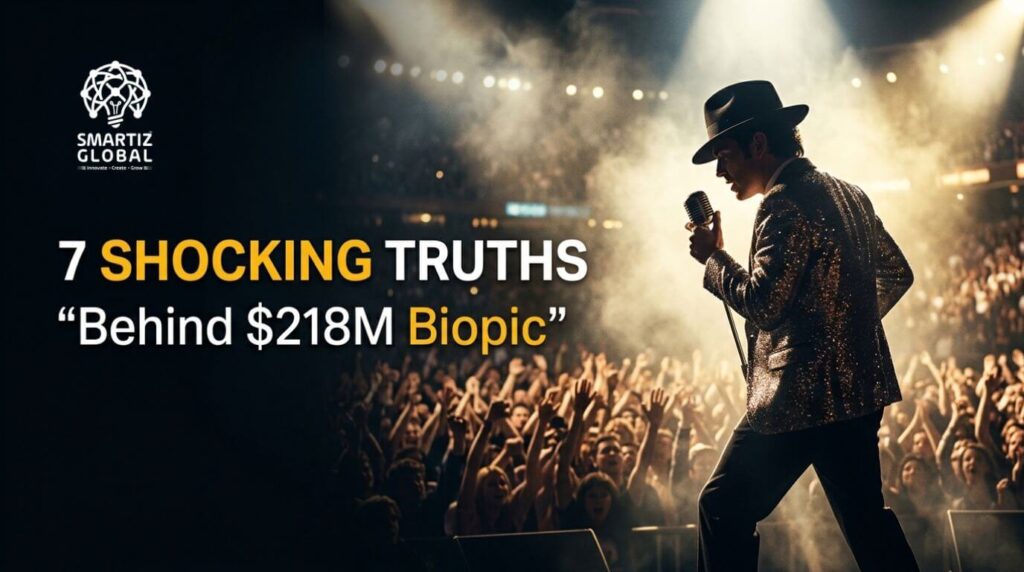
Michael Jackson biopic made $218M opening but missed key truths. Discover 7 shocking facts critics reveal about the film fans loved and critics slammed.
Table of Contents
Introduction: The Legend, the Man, and the Movie No One Can Honestly Make
There was never a star like Michael Jackson. It’s not a matter of nostalgia – it’s scale, impact and cultural gravity.
We’ve seen Madonna reinvent the boundaries of pop, Beyonce redefine modern superstardom, and Drake dominate the charts with machine-like consistency. But Michael didn’t just succeed within the system – he rewrote it.
When he released Thriller, it just didn’t sell records. It became a global cultural phenomenon – a shared reference point across generations, countries and ideologies. People argue about politics, religion, even reality – but almost no one argues about thrillers. That level of consensus is rare. It is a myth.
So when Lionsgate released Michael on April 24, 2026 – directed by Antoine Fuqua and starring Jaafar Jackson – expectations weren’t just high. They were impossible.
And commercially? The film delivered.
- $218 million global opening weekend
- Record-breaking debut for music biopic
- Packed theaters, emotional audiences, viral clips
But critically? It fell apart.
- 37% critic score
- 97% audience score
That gap isn’t just a disagreement. It’s a cultural rupture.
It shows something uncomfortable: a large part of the audience did not understand Michael Jackson. They set out to experience him again. To relive the music. To reconnect with the legend.
And the film? It gives them exactly that.
But in doing so, it avoids something essential.
Because Michael Jackson’s story was never easy. And any movie that pretends to be him… doesn’t tell his story at all.
Box Office Phenomenon Critics Couldn’t Accept
Let’s start with the obvious: $218 million is huge.
For reference:
- Most music biopics worldwide gross less than $50 million
- Even Bohemian Rhapsody started small before becoming a hit
So what does Michael’s debut really tell us?
That Tells us Three Things:
- Michael Jackson’s cultural appeal is still unmatched
Even in 2026, nearly two decades after his death, his name alone can fill theaters around the world. - Jaafar Jackson delivers what fans wanted
Their resemblance – physical, vocal and dynamic – is uncanny. Not an imitation. Something closer to an avatar. - Audiences weren’t looking for a complete story
They wanted nostalgia. Music. Emotion. Familiarity.
And that’s what they got:
- “Billie Jean”
- “Beat It”
- “Thriller”
- Stadium energy
- Emotional highs
But critics weren’t judging it as a concert film.
They were judging it as a biography.
And that’s where it falls apart.
The Core Problem: A Biography That Avoids Its Defining Chapter
Critics were not subtle about their main complaint:
The film completely omits the allegations of child sexual abuse against Michael Jackson.
That omission isn’t minor. It is structural.
Two competing perspectives emerged:
Fans argue:
- The film ends in 1988
- The main allegations came later (after 1993)
- So why include them?
Critics argue:
- You can’t tell Michael Jackson’s story without addressing them
- They shaped his legacy more than anything else
Both positions make sense.
But only one works for a film that calls itself a biopic.
Because a biopic isn’t just a sequence of events – it’s a complete arc.
And Michael cuts that arc off before it gets complicated.
The Legal Bombshell That Changed Everything
This is where things get really wild – and mostly ignored.
Michael’s original version was:
- About four hours long
- Covering his life after 1988
- Including material addressing the allegations
Then everything changed.
The Trigger: A Legal Clause
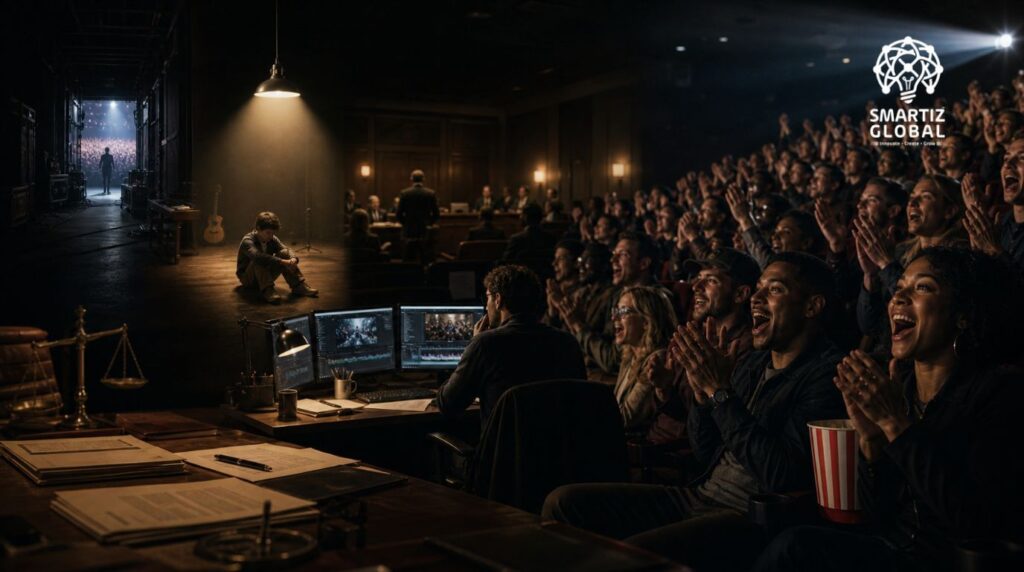
During post-production, lawyers discovered a clause related to Jordan Chandler’s 1993 settlement.
That clause prohibits any depiction or mention of them in film adaptations.
It required a legal restriction:
- Complete rewrite of the third act
- 22+ days of reshoots
- Millions added to the budget
- A year of delays
Editor Jon Ottman described it vividly:
“A saw was taken out in the middle of the film.”
That’s not creative editing.
That’s surgical removal.
And what was removed wasn’t filler.
That was the part that made this a true biopic.
Narrative Reconstruction Strategies: How to Find a Curated Story
If you want to understand not just Michael’s, but any curated story, these five frameworks are essential.
1. Endpoint Audit
Where does the story end – and why?
Michael ends 1988 with a triumphant concert.
The first major accusation? 1993.
That’s not a coincidence. It is a cutoff point designed to avoid conflict.
2. Fund Trail Technique
Follow the money.
- The Jackson estate co-produced the film
- They provided the music rights
- They funded the reshoots
- They took more control after costs escalated
That relationship is not neutral.
That doesn’t mean the film is wrong.
It just means it’s selective.
3. The Four-Hour Shadow
A longer version exists.
Which means:
- The scenes about the accusations were filmed
- The performances were captured
- The story arc was created
They just… left.
When analyzing any biopic, ask:
- What version existed before this one?
4. Reconciliation Clause Decoder
Legal agreements shape storytelling more than the audience realizes.
Here:
- A clause from the 1990s determines what can be shown in 2026
That’s not telling a story.
It is the legal architecture that shapes memory.
5. Orphan Character Method
Keep an eye on characters that aren’t going anywhere.
Example:
- Bill Bray (Head of Security) appears… then disappears
- Scenes exist without resolution
These are remnants of the removed version.
The ghosts of the whole story.
Jaafar Jackson: Genius Within a Controlled Narrative
Let’s separate the film from its main performances.
Because by most accounts, Jaafar Jackson is legitimately impressive.
What Works:
- Physical resemblance: compelling
- Movement: fluid, precise, natural
- Emotional delivery: surprisingly grounded
Editor Jon Ottman even said:
“I’m watching the beginning of two great careers.”
That’s not a casual compliment.
But Here’s The Tension:
Jaafar is not just an actor.
He’s family.
- Jermaine Jackson’s son
- Michael’s nephew
So he’s starring in a story:
- Controlled by an estate
- Shaped by legal constraints
- Designed to protect the legacy he’s in
It adds a layer that most actors never face.
The Film’s Psychological Framing: Softening the Edges
To its credit, the film does attempt to explain Michael’s behavior.
But it does so in a very specific way.
Narrative Perspective:
- Abusive Father (Joe Jackson)
- Lost Childhood
- Emotional Isolation
- Fame at a Young Age
Consequence?
Picture of someone:
- Childlike
- Gentle
- Alone
- Misunderstanding
Supporting imagination:
- Animals as companions
- Toys and imaginary places
- Emotional tenderness
This creates a powerful emotional logic:
“He wasn’t weird – he was hurt.”
That framing is compelling.
But it also does something else:
It answers questions the film never really asks.
The Race Dimension: A Necessary But Avoided Complexity
Any serious discussion of Michael Jackson must include gender.
Because his career wasn’t just musical — it was cultural.
- MTV initially resisted black artists
- Michael broke that barrier
- His success changed industry norms
Director Antoine Fuqua acknowledged the uncertainty surrounding the allegations and hinted at the financial motivations behind the allegations.
Some fans believe that:
- These accusations were racially motivated
- They were attempts to undermine a powerful black artist
that perspective is not unreasonable.
It is rooted in real historical precedents.
But here’s the point:
The film doesn’t explore this complexity.
A truly honest biopic would hold to both truths:
- The reality of racial prejudice
- The reality of serious allegations
Instead, Michael avoids confrontation altogether.
What Was Cut – And Why It Matters
The removed material wasn’t just controversial.
It was structurally important.
Major changes:
1. Voiceover removed
- Older Michael narrating his life cut out
- Result: Less reflection, more immersion
2. Dark ending changed
- Origin: Police lights, introspection
- Final: Triumphant 1988 concert
3. Narrative arc cut
- No transition to conflict
- No exploration of later life
One critic compared it to:
The end of an O. J. Simpson biopic with his Heisman Trophy.
It’s harsh.
But structurally accurate.
How to Watch Michael Without Being Misled
If you’re going to watch it – and you probably will – here’s how to really get value out of it.
Watch One: Feel it
- Enjoy the music
- Experience the performance
- Let the emotions flow
Because it works on that level.
Watch Two: Analyze it
Ask yourself:
- What behaviors are explained but never questioned?
- What timeline gaps exist?
- What emotional cues are repeated?
Most importantly:
Would anyone unaware of the allegations know they exist?
Then: Expand your perspective
Watch:
- Leaving Neverland
Read:
- Investigative Journalism
- Legal Records
- Multiple Perspectives
Because the whole story doesn’t exist in one place.
Common Dilemma: “Acquitted” vs. “Innocent”
This distinction is more important than people want it to be.
Facts:
- 2005 criminal case → acquittal
- 1993 case → out-of-court settlement
What acquittal means:
- Not enough evidence to meet legal standards
- Did not reach “beyond reasonable doubt”
What it does not mean:
- It does not prove innocence
- It does not erase the charges
These are the different categories:
- Legal consequence
- Reality
Mixing them up makes the situation very complicated.
Should This Movie Have Been Made?
There is no clear answer.
Director Antoine Fuqua said his goal was to humanize Michael.
That’s a reasonable goal.
But here’s the problem:
Humanization ≠ fully portrayal
And when:
- The estate funds the film
- Legal restrictions limit the content
- The subject’s legacy is disputed
You’re not just making a film.
You are shaping memory.
- At that point, the question becomes:
Is this storytelling – or legacy management?
Final Verdict: A Beautiful, Unfinished Story
Michael is:
- Technically strong
- Emotionally effective
- Legally binding
He will make you feel something.
You will listen to the music.
You will believe the performance.
But afterwards, something remains.
The feeling that you don’t get the whole story.
Because you don’t.
Michael Jackson was both:
- The biggest star in history
- A deeply controversial figure
Those realities coexist.
And any film that only shows one… isn’t telling the truth.
It’s telling one version.
An honest film about Michael Jackson?
It hasn’t been made yet.
And given the power structures surrounding his legacy…
It could never happen.
Frequently Asked Questions
Why aren’t the abuse allegations included in the Michael biopic?
This error was explained by two main reasons.
First, a legal clause attached to Jordan Chandler’s 1993 settlement prevented filmmakers from portraying or referencing him, forcing extensive rewrites after filming was completed.
Second, the Jackson estate co-produced the film and had significant influence on the final product – especially after funding the expensive reshoots.
These factors combined to eliminate that entire narrative thread.
Is this film still worth watching if you know the whole history?
Yes – but only if you understand. As a music-based experience, it is effective, emotional, and technically impressive.
Jaafar Jackson’s performance is simply worth watching. But as a full biography, it is deliberately incomplete.
Treat it as a tribute concert, not a historical document, and you’ll get more out of it.
Who is Jaafar Jackson and why was he cast?
Jaafar Jackson is Michael Jackson’s nephew – the son of Jermaine Jackson.
Her casting brought both honesty and controversy due to her family ties.
However, most critics agree that he gives a really strong performance, especially in dancing and physical portrayal.
His connection to the family adds emotional weight, but also places him in a carefully controlled story.
Was there really a longer version of the film?
Yes. The original cut is said to have lasted around four hours and included material covering the later, more controversial years of Michael’s life.
That version was abandoned after legal issues arose, leading to a complete restructuring of a third of the film.
What viewers now see is a significantly altered version.
What does the critic and audience score gap really mean?
A 97% audience score versus a 37% critic score indicate two different expectations.
Audiences largely wanted a nostalgic, music-heavy experience – and the film delivers just that.
Critics were expecting a broad biographical film and judged it accordingly.
This difference highlights the film’s success in one area and its failure in another.