
Table of Contents
Introduction: The Meeting No One Knew About
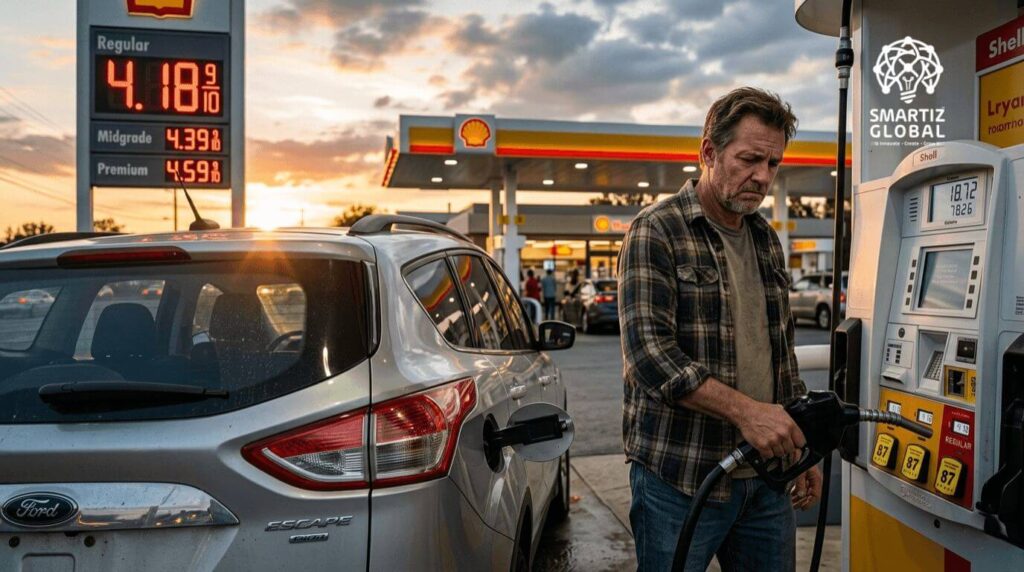
Imagine this: You’re standing at a gas station somewhere in the U.S. – maybe Ohio, maybe Texas, maybe a little off your daily commute. The pump reads $4.18 a gallon. You sigh, swipe your card, and wonder how things got so expensive again.
What you don’t see is what happened just a few hours ago behind closed doors in the White House.
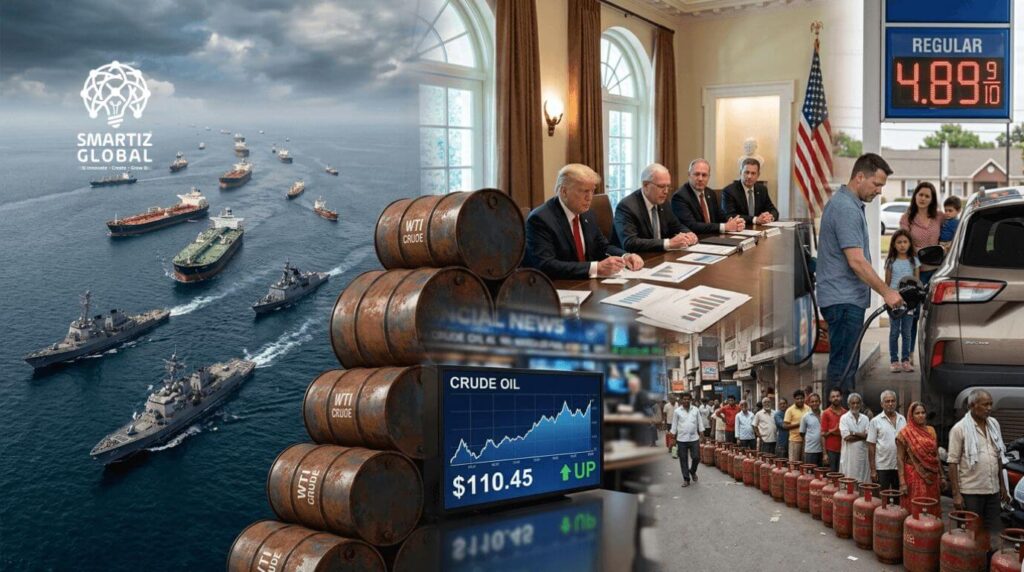
On April 29, 2026, top oil executives from major players such as Chevron, Vitol, Trafigura, and Mercuria sat down with Trump administration officials. This meeting, led by Treasury Secretary Scott Besant, was not about abstract “energy policy.” It was clear, strategic, and political:
How long can the U.S. suppress Iran – and how much pain can American consumers endure before it backfires?
This is the real story behind your gas bill.
This is not just a foreign policy issue. It’s not “out there.” It’s right here – affecting your commute, your grocery bills, your travel plans, and your savings.
And at the center of it all? A narrow stretch of water that most people had never considered before this year: the Strait of Hormuz.
The Choke Point The World Forgot To Worry About
Before February 2026, the Strait of Hormuz was barely mentioned in everyday conversation. Today, it is perhaps the most important – and dangerous – economic artery on the planet.
Here’s why it’s important:
- It’s only 21 miles wide at its narrowest point
- About 20-25% of global oil shipments pass through it
- It carries oil from Saudi Arabia, Iraq, Kuwait, the UAE, and Qatar
- It also transports large quantities of LNG (liquefied natural gas)
In normal times, about 3,000 ships pass through this corridor every month.
But these are not normal times.
What Changed on February 28, 2026
Everything changed when US and Israeli forces launched coordinated attacks on Iranian targets. Iran immediately retaliated by closing the strait.
Their tactics included:
- Naval mines
- Ship seizures
- $1 million toll per ship
- Military harassment of commercial traffic
Soon, the U.S. responded with a counter-blockade, leading to what analysts now call a “dual blockade”.
Translation: Both sides are choking the same vital artery at the same time.
Immediate Impact
- Brent crude rises to $115/barrel
- US gas prices average $4.23
- Airlines raise ticket prices due to jet fuel hike
- Global inflationary pressures rise
The International Energy Agency called it:
“The largest supply disruption in the history of the modern oil market”.
That’s not an exaggeration.
What Trump Really Said in That White House Room
The April 29 meeting was not a press event. There were no cameras. No speeches. Just strategy.
Three main themes dominate:
1. Stabilizing Markets (or Trying To)
The administration has already taken several steps:
- Strategic Petroleum Reserve release (in coordination with the IEA)
- Activation of the Defense Production Act
Adjustments to the Jones Act
Together, these steps injected approximately 400 million barrels into the market globally.
But here’s the catch:
You can’t just change blocked chokepoints with policy tools.
2. Extending The Blockade
President Donald Trump is said to be committed to keeping up the pressure on Iran – even if it takes months.
US Navy operations now include:
- Boarding suspicious tankers
- Intercepting ships paying Iranian tolls
- Clearing naval mines
Goal: Completely cut off Iran’s oil revenues.
3. Managing The Domestic Blow
This is where things get politically sensitive.
Gas at $4+ isn’t just an inconvenience – it’s a voter issue.
- Midterm elections are approaching
- Democrats are portraying this as a “self-imposed crisis”
- Household budgets are tightening
The administration knows this. That’s why oil executives were in the room – not just to advise, but to align.
Dual Blockade: A High-Stakes Game of Economic Chicken
Let’s be honest – this situation is strategically untenable.
The US declared a blockade on a waterway that Iran had already disrupted. On paper, it seems unnecessary. In reality, it serves a different purpose.
The U.S. Strategy
- Economically starve Iran
- Limit their ability to export oil
- Force concessions on nuclear weapons
Iranian Response
Iran has not backed down. Instead:
- Its currency (the rial) has collapsed
- Inflation is rising
- It relies on allies like Russia
Foreign Minister Abbas Araghchi recently met with Vladimir Putin – a clear sign that Iran is not isolated.
The Stalemate
Iran’s proposal:
- Reopen the Strait
- End the War
- Delay Nuclear Talks
US Response:
- Not Good Enough
Secretary of State Marco Rubio publicly rejected the proposal.
The result: Neither side is batting an eyelid.
Crisis Navigation Framework: 5 Strategies Smart Supervisors Are Using Right Now
Strategy 1 – Supply Chain Audit
Know what really affects your wallet:
- Gas prices
- Airline tickets
- Grocery logistics
- Heating costs
Don’t react blindly. Map your exposures.
Strategy 2 – Motivation Mapping
Forget the rhetoric. Follow incentives.
- U.S. oil producers → profiteering
- Russia → revenue-raising
- Gulf states → higher earnings per barrel despite lower volumes
When you track the flow of money, political messages start to make more sense.
Strategy 3 – Ceasefire Watch
Watch for these signs:
- Iranian toll enforcement increases
- New U.S. attacks
- China’s oil import behavior
That last one is important.
Strategy 4 – Consumer Protection
- Practical Moves:
- Book Travel Early
- Delay Large Shipment Purchases
This Isn’t Panic – It’s Planning.
Strategy 5 – Identifying Historical Patterns
Past crises show a pattern:
- Prices rise before resolution
- Volatility lasts for months, sometimes years
Expect turmoil – even when progress is announced.
The End of Iran: What Tehran Really Wants
Iran’s demands haven’t changed much:
- A complete ceasefire (including in regional conflicts)
- The release of frozen assets
- War reparations
- The removal of U.S. control over the strait
And critically:
They want the nuclear talks postponed.
The Core Conflict
- U.S.: Iran should never have nuclear weapons
- Iran: Nuclear program is peaceful and non-negotiable (for now)
This is a stalemate.
Human Cost
- 3,000+ deaths in Iran
- 2,500+ in Lebanon
This is not just a strategy – it is a real war with real consequences.
Global Ripple Effect
This crisis is not just American.
India
- LPG shortage affecting millions
- Industrial slowdown (especially in Gujarat)
- Navy escort missions begin
Europe
- Gas storage is very low
- Prices are rising again
- Second major energy crisis after 2022
Gulf States
- Food imports disrupted
- Prices rise 40-120%
- Infrastructural damage (LNG facilities in Qatar affected)
Trump’s Domestic Problem: The Reality of $4
Here’s the political truth:
Gas prices decide elections.
Math
- Pre-war: ~$2.98/gallon
- Current: ~$4.23/gallon
- Impact: ~$500 extra per household per year
Add inflation and travel costs, and the contraction becomes real.
Policy Limitations
Despite Aggressive Action:
- U.S. Oil production cannot increase immediately
- Global supply losses are too large
Political Risk
If prices remain above:
- $4 → risky
- $5 → unprofitable
Could change dramatically in the medium term.
What Oil Executives Know That You Don’t
Executives in that White House meeting understand one key reality:
Even if the war ends tomorrow, the damage is long-term.
Infrastructure Impact
- Iranian oil facilities damaged
- Qatar LNG hit
- Saudi/UAE infrastructure targeted
Recovery timeline: 2027 or beyond
Price Estimate
- Best case: ~$3.50 by end of 2026
- Worst case: $5+
The sub-$3 era isn’t coming back anytime soon.
Strategic Advantage
There is a hidden advantage for some:
U.S. Shell regains dominance.
That’s the quiet economic incentive behind “energy dominance.”
The Nuclear Question That No One Has Solved
At the Root of It All:
Will Iran Build Nuclear Weapons?
Pre-War Situation
- Uranium stockpile near weapons-grade
- No confirmed weapons assembly
Current Situation
- Program status unclear
- Partially damaged
Why It Matters
Without resolving this issue:
- Any ceasefire is temporary
- Tensions will return
This is the unresolved root of the crisis.
Insider Tip: The Most Important Signal
Keep an eye on China.
If China reduces Iranian oil imports, it signals:
Economic pressure is working
Iran may be close to a deal
Ignore the headlines. Keep an Eye on the Data.
Common Pitfall: Ceasefire ≠ Solution
We’ve seen it before:
- Prices drop on ceasefire news
- Rebound when story fails
Lesson:
Wait for actual shipping data – not ads.
Final Verdict: The Crisis Isn’t Coming – It’s Already Here
This is not a future problem. It is happening now.
That White House meeting wasn’t about planning – it was about damage control.
The Strait of Hormuz has become the epicenter of a global economic storm. And its effects are already hitting your pockets.
What You Should Do Now
- Stay informed
- Watch real indicators (China, shipping data)
- Adjust your financial planning
- Hold leaders accountable
Because this is not abstract.
It is your gas bill.
Your grocery bill.
Your daily life.
And it is not over yet.
Frequently Asked Questions
Will gas prices drop back to $3?
Not in 2026.
Even in the best-case scenario, the costs of infrastructure damage and disrupted supply chains will be high. Experts estimate that if peace happens soon, it will be around $3.50 by the end of 2026. If tensions continue, prices could rise further before stabilization occurs.
The global oil system doesn’t reset overnight. Once a supply chain breaks down, it takes time to rebuild it – and that delay is reflected directly at the pump.
Why did America block the Iranian strait in advance?
Because the objectives are different.
The Iran blockade disrupts global trade. The U.S. counter-blockade specifically targets Iranian exports – cutting off revenue while attempting to maintain limited commercial flows through naval escorts.
It is a financial pressure strategy. But it comes with a trade-off: reducing supply globally, which drives up prices – including for Americans.
What happens if there is no deal?
Prolonged stagnation could push oil prices above $120 per barrel. This would trigger a global economic slowdown, increase inflation, and possibly raise concerns of recession in many regions.
It could also deepen geopolitical alliances – particularly between Iran, Russia and China, which would reshape the global power structure in the process.
This won’t just be an energy crisis. It will be a long-term geopolitical change.
What is Iran’s nuclear status now?
Before the war, Iran possessed enough enriched uranium for a nuclear device. Since the war began, the full status of its program has been obscured by attacks and restricted access.
It is this uncertainty that makes the US insist that nuclear discussions remain at the heart of any deal. Without clarity, any agreement risks becoming tentative.
How are other countries reacting?
Responses vary widely.
India and Pakistan are escorting ships. Europe is striving to rebuild its energy reserves. China continues to buy Iranian oil. Russia benefits from higher prices.
There is no unified global response – just a patchwork of national strategies driven by self-interest.